
Category: Product

  • Keeping your digital priorities straight

    Keeping your digital priorities straight

    Sometimes it’s hard to stay focused on what’s important for front-end digital teams in a company, particularly when there are so many things which could be done.

    Now an exco view or a smart consulting company is going to give a list like this:

    1. Define your business strategy
    2. Look at your business process and operating model
    3. Define your digital strategy, process and operating model in the light of one and two
    4. Choose digital products to create change within the organization
    5. Look at your architecture and technology you want to use
    6. Understand how data and analytics will play their part
    7. Do a business case and ROI analysis
    8. Execute the above

    Here’s the problem – that’s a three-to-ten-year journey. And how many members on an executive or board change in ten years — a large percentage of them.  Therefore, trying to maintain consistency of rollout of a multiyear plan is hard when people and priorities keep shifting.

    But most digital teams don’t start from here. They have new strategy coming in on the one side, and a host of competing priorities on the other:

    1. Large backlogs of historical things they just need to get done
    2. Stakeholders hoping for new and shiny things to be delivered
    3. Demanding KPIs
    4. Vendor management and or management of internal teams
    5. Etc.

    It becomes a juggle between trying to align with what the board and executive team are thinking and digital things which need to get taken care of to make the digital ecosystem work.

    So how does one tackle the problem?

    1. Start with getting the funnel working

    At the top of the digital funnel, reach is required to as many people as possible and at the bottom, conversion is required to impact the bottom line or key goals of the organisation.

    Marketing, social and content teams need to ensure the right content and campaigns are reaching the broadest base of people possible to draw as many people into the top of the digital funnel as possible.

    From there, UX and product teams need to ensure the journeys and offerings are as efficient as possible to bring people down the funnel and conversion rate optimisation teams need to figure out how to make conversion rates as high as possible.

    This is the heartbeat if any digital team. And yet, digital teams often get so lost in the things talked about above that they forget to ask the simple question: does our digital funnel work?

    2. Data is critical

    Having the ability to capture the right data and utilise it is the other side of the coin. An organisation’s funnel can work very well, but if the data is not being captured and analysed, it’s like having a cullender and not a funnel.

    From a data perspective, if you’ve got good traffic, start with segmenting the audience with a DMP and targeting those users on the Internet as well as using look alike audiences.

    From there, it’s about moving audiences from anonymous to know through login scenarios, lead generation etc. to identify the base as well as looking for information gaps and strategies to fill those gaps.

    Practically, companies often have massive gaps in terms of percentages of accurate email addresses, mobile numbers, location of their users and personal information.

    This must be one of the starting focal points for improving data sets and capitalising on them.

    3. Personalisation

    Once the funnel is working correctly and the quality and volume of data is on the increase, then personalising content to the user base becomes important.

    What are the interaction patterns of the base, what are their preferences or interests and how do users get interacted with based on that information?

    When do you communicate with someone on their journey? Do you have opt-ins to marketing material? Are you communicating to someone based on their preferences or their purchase or interaction history?

    While companies should be targeting users based on their preference, so often they are targeted on the basis of age, location, gender, the device used. But actually, these metrics do little to bring clarity to the type of user the organisation is trying to reach.

    4. Focused projects

    Once 1-3 are working well, then what can be done on an incremental basis or product evolution basis to grow metrics?

    Using digital for customer satisfaction, gamification, self-service, cost reduction, improving efficiencies and so on are all projects which can be explored.


    MVP’s can be created, and pilots can be run to test the projects’ efficiencies. From there, key projects can be identified and budgeted for to move forward.

    5. Shifting the needle

    If all the above is in play, then organisations can think about what would shift the needle on a digital front in a larger way.

    Does the company need a new channel like a messaging bot? Could a ticketing system improve client interactions? Could staff be more empowered with digital hardware and software like tablets and software for direct interactions with clients?

    In other words, what big projects could be undertaken to make a significant impact for the business.

    The challenge:

    The challenge is digital teams are often expected to start with 5 and 4 and try and juggle 1-3. On a scale of 1-10, CDOs ideally need points 1-3 to be working at a 7/10 or higher before they think of 4 and 5. Once that’s happening, then the focused projects in number 4 will give medium term wins, while large scale projects in 5 will give long term wins.

    Sometimes this order of priority may not be possible but knowing what you need to be doing and then figuring out how to try and get the support to do it is the first important step.
  • Problems, Assumptions and the Maldives

    Problems, Assumptions and the Maldives

    Building products is a simple concept with a complex journey that often finds you arriving at a destination you never intended to visit.

    Think about the products many of us use today and the simple concepts they are built on: WhatsApp lets you chat to people and groups. Cloud storage lets you store things on someone else’s server. AirBnB facilitates staying in someone else’s home.

    However, behind all these products are sophisticated tech stacks, significant product work and well thought out user journeys. What appears simple is incredibly complex.

    In this post, I’ll talk about three areas you need to think about when building a product:

    1. What is the problem you are trying to solve?
    2. What assumptions are you making?
    3. Are you going to the Maldives or a hotel?

    The problem

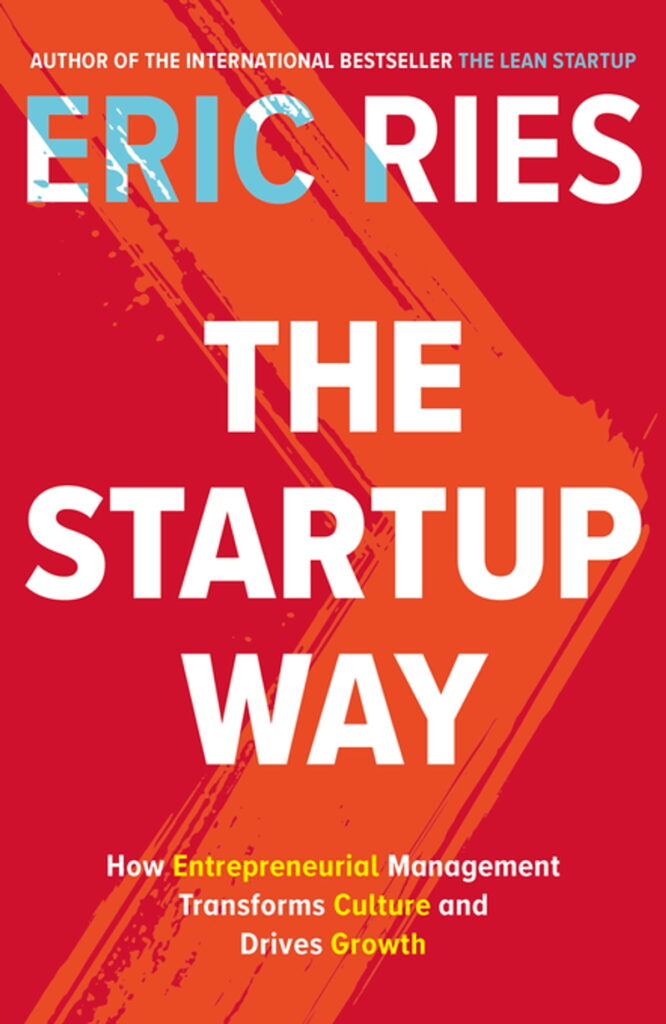
    As Eric Ries says in his book, The Startup Way, validating ideas by talking to people to see whether they really have the problem you are trying to solve is the first critical step. Ries poses three questions to start:

    1. Do people actually have the problem you think they do?
    2. How do they approach that problem today?
    3. Is your solution a better alternative than what they do today?

    There are some more we could add:

    1. How quickly could I test this?
    2. How complex would the process be to build such a product and maintain it?
    3. How much money do I need to get the product up and running and then scale it?

    What often happens in business is that people ending up solving for problems they have in their business, not problems the customer has.

    To illustrate this, I remember the launch of the Windows Phone by Microsoft. HTC was licenced to build a phone called the Windows Phone and Microsoft tried out their tiled operating system (OS).

    At the press launch of the phone Microsoft gave us a long presentation on why their OS was amazing and then I picked up the phone in my hand and tried it out. After ten minutes, I turned to the person next to me and said, this phone is like asparagus ice cream.

    Why asparagus ice cream you ask? Because no one eats asparagus ice cream. Its like Microsoft was trying to sell the concept of asparagus ice cream to us. They were very passionate about it, but no matter what they said, it was still asparagus ice cream.

    Quite simply the tiled user interface was nothing like an iPhone or Android and people did not take to it because the OS did not solve a problem that people had.

    Ass of you and me (ass-u-me)

    Making assumptions is the downfall of many products. Ries asks the following:

    1. What assumptions must be true for the project to succeed?
    2. How much do you really know about customers’ preferences, habits and need for a solution like the one you’re proposing?
    3. What evidence is there that customers really have this problem and will strongly desire to pay for the solution?
    4. What is known about what customers really want from the solution?

    As the old saying goes when assume things you make an ass out of you and me. Below is a great way to deal with assumptions.

    In addition to this, when I was in Moscow on business once, a supplier we were meeting with refused to take on one of two projects presented to them. When they declined the second, we were flummoxed.

    Their answer was it would take too much magic to get right. Thinking we had suddenly entered a fantasy novel, we asked what they meant.

    They said if there were more than two pieces of magic (really hard problems with no obvious solution) then they would not take it on in principle.

    These kinds of mental leaps are often made in product development. Products with around 60% of the detail and some good planning often have a couple of massive unknowns which have the potential to become mission failure problems. They’re like icebergs, which may not appear that big on the surface, but under the water they are massive.  

    Off to the Maldives

    Defining the problem and assumptions are often wrapped up in how we think about product development. Talking to several clients who want products built, I was reminded about the concept of going on holiday. When people describe their favourite holiday destination, they often describe the area they love so much – like the Maldives.

    What they battle to do is describe the hotel, why their check in experience was so good, why they liked the room and the great bar down at the beach.

    These are in fact that nuts and bolts of what made their package deal to the Maldives so great, but unfortunately while the hotel business may look simple, there is a massive amount of investment, building, process and staff required to make the Maldives a great holiday destination.

    Building a great product requires understanding the problem you’re trying to solve, being honest about the assumptions you’re making and the amount of magic required and the product detail to make an effective product.

  • Steve Whitford, Founder of Th1nk

    Steve Whitford, Founder of Th1nk

    For more on Steve Whitford, Founder of Th1nk

    Steve Whitford

    Email: steve@th1nk.co.za

    LinkedIn profile

    • Consultant to C Suites on digital strategy and execution.
    • Product lead on building large digital ecosystems.
    • Lead design, product, and development teams on large scale projects.
    • Strategic Innovator.
    • Omnichannel expert across Web, App, WhatsApp and USSD.
    • Digital pioneer of several start-ups including e-Sports, gamification, mobile gaming.

    With a strong product skillset, I’ve always worked with platforms. From designing the structure of Content Management Systems and interactive portals in the early days of the Internet, through to designing large scale loyalty and self service front ends today that plug into platforms like Salesforce.

    I’ve also had to lead teams in complex environments, including directly managing a team, running internal and external development teams and managing stakeholder engagements with multiple decision makers across large projects.

    From a leadership perspective, I’ve helped to create shared consciousness within departments and organizations around their goals and have created team frameworks to drive decision making as deep into the organization as possible to create the momentum needed to achieve those goals. I’m a leader who understands my skillset, work gearing and how to add value to those I work with.