Deliver product with discipline and clarity.
Most products fail not because the idea was wrong, but because the team didn't know how to test assumptions, read signals, and make disciplined decisions about what to build next.
The four phases of product lifecycle
Every product moves through four phases. The teams that understand where they are — and what that phase demands — consistently outperform those who don't.
Discovery
Define the problem worth solving. Validate the market, understand the user, and test assumptions before committing to a build. Most teams skip this. Most products fail because of it.
Build
Ship the minimum version that tests your core hypothesis. Speed matters. Quality of learning matters more. Build to learn, not to launch.
Grow
Validate product-market fit and establish the operating model that lets the team scale delivery without losing quality or momentum.
Scale
Optimise what works, retire what doesn't, and build the systems that allow the product to grow without the team breaking under the weight.
What you'll work through together
Eight weeks of live, facilitated sessions. Each session connects the framework to your real product context.
-
01
Product Lifecycle
Map the full arc from idea to scale. Understand what each phase demands from the team — and what it punishes when you get it wrong.
-
02
Hypothesis and Experimental Design
Turn assumptions into testable hypotheses. Design experiments that give you real signal, not confirmation bias. Build the discipline of learning before building.
-
03
Product Operating Model
Design how your product team works — roles, rituals, decision-making, and the operating rhythm that keeps delivery coherent as the product and team scale.
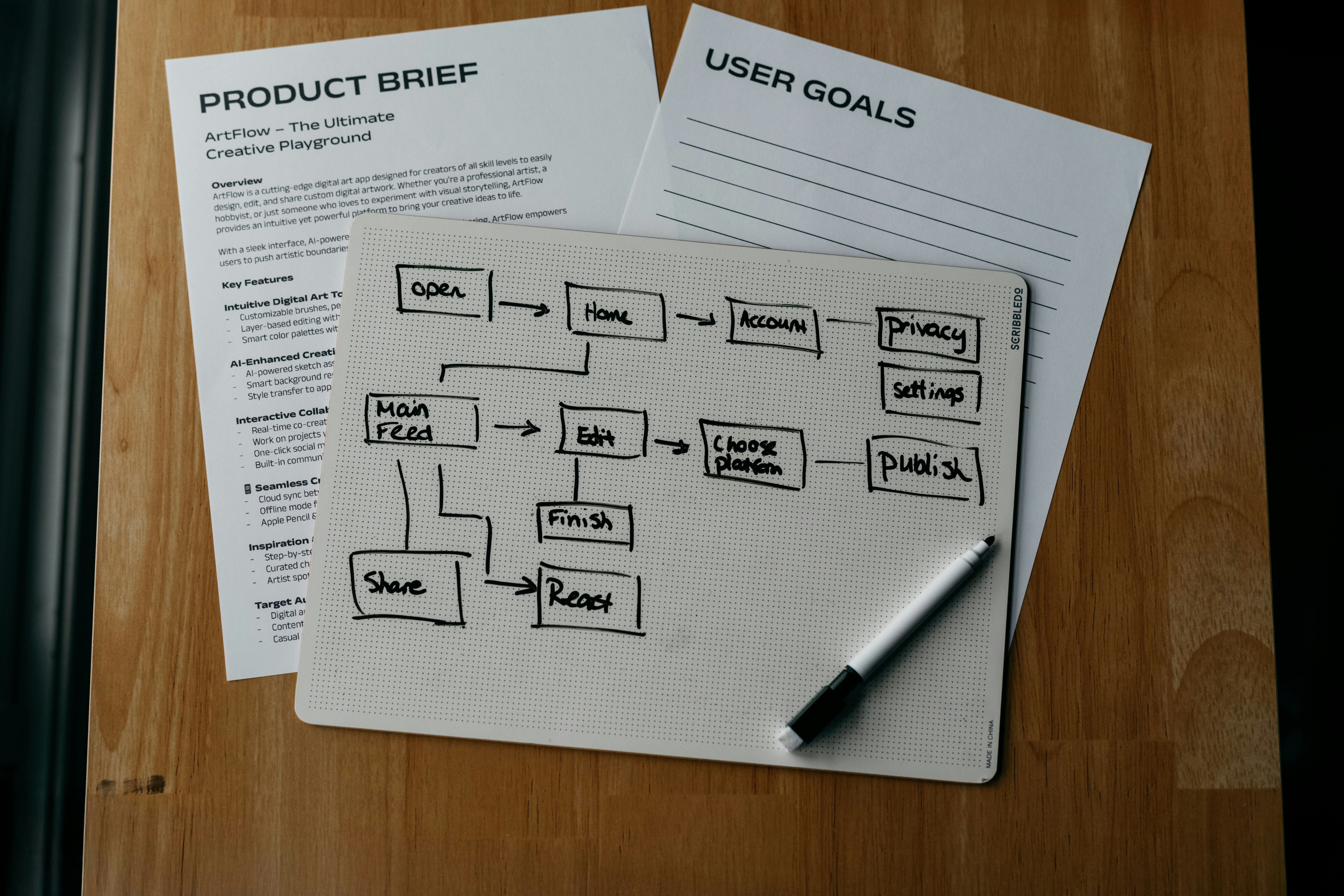
What good product delivery looks like
These are the disciplines that separate product teams who ship things people use from those who ship things that get shelved.
Product Market Fit
The moment when the product reliably solves a real problem for a defined set of users — and those users come back, tell others, and resist switching away. Everything before this is discovery.
Test Your Assumptions
Every product decision rests on assumptions. The job of a product team is to identify the riskiest ones and design the cheapest possible test to validate or invalidate them before committing to build.
Gear Your Team to Deliver
The right operating model for a discovery team looks nothing like the right model for a scaling team. Understanding which gear you're in — and configuring the team accordingly — is a core leadership skill.