While working with one of the big five consulting houses on a project, they revealed data that the average Chief Digital Officer (CDO) lasts only 18 months in a South African corporate. Its one of the reasons why digital really battles to build momentum in companies and solving the problem is a tricky exercise.
The lay of the land
The first challenge is the lay of the land. Corporates will generally have legacy and disparate systems. Whether digital teams are fragmented across divisions or consolidated centrally, both scenarios come with inherent challenges. Then there is the challenge of whether to introduce new tech or rebuild old, dysfunctional systems. The former merely adds to the layers within the business and the latter task of rebuilding systems seems like a grudge project, which is hard to secure budget for.
And practically as an executive, the CDO is often faced with a dilemma: how do they shift the needle quickly enough to show results before their CEO, the executive and the board start to get concerned about the pace of digital advancement within the company.
In fact, its such a difficult exercise that the consulting house recommends to their clients that if they really want to build a digital business, they do so on the side from the ground up and then decommission the previous business and move people over.
What are the options:
The new tech option is about new systems. For example, new Marketing Tech like market CRMs, content marketing platforms, analytics layers and so on.
Master data management, 360 views of the customer, targeted campaigns and all of these good things become all the rage.
Then there is the rebuild option or optimisation. Let’s get self-service working properly and technology to reduce call centre costs. Let’s get ecommerce working properly and get the customer the option to buy online. Let’s improve delivery options to get the lead time of product into consumers hands down to a day or two or even hours.
Let’s bring in automation into the business and improve business processes. Let’s reduce licensing costs with optimisation around software provision within the business as well as reducing cloud costs.
All of the above are good things but come with their challenges. Cost reduction exercises are a once off exercise (you can only optimise so much) and new tech stacks or rebuilds of old scenarios invariably run over time and budget, leaving the CFO and possibly even the CEO not very happy with the CDO.
What’s to be done:
- Start with the basics
No doubt an unpopular choice, but thinking about the customer and how they experience the business digitally is key.
Does the customer even know what your business is, after looking at the website for two seconds? Can they find something within three clicks? Does your search function actually work? Are the digital journeys optimised and clear? Do pages load quickly? Is the value proposition on product pages clear?
Invariably there is often a gap between digital from an infrastructure perspective and from a content perspective, with the latter usually falling to the marketing department. This leads to tension when trying to address the above questions.
2.Think about funnel
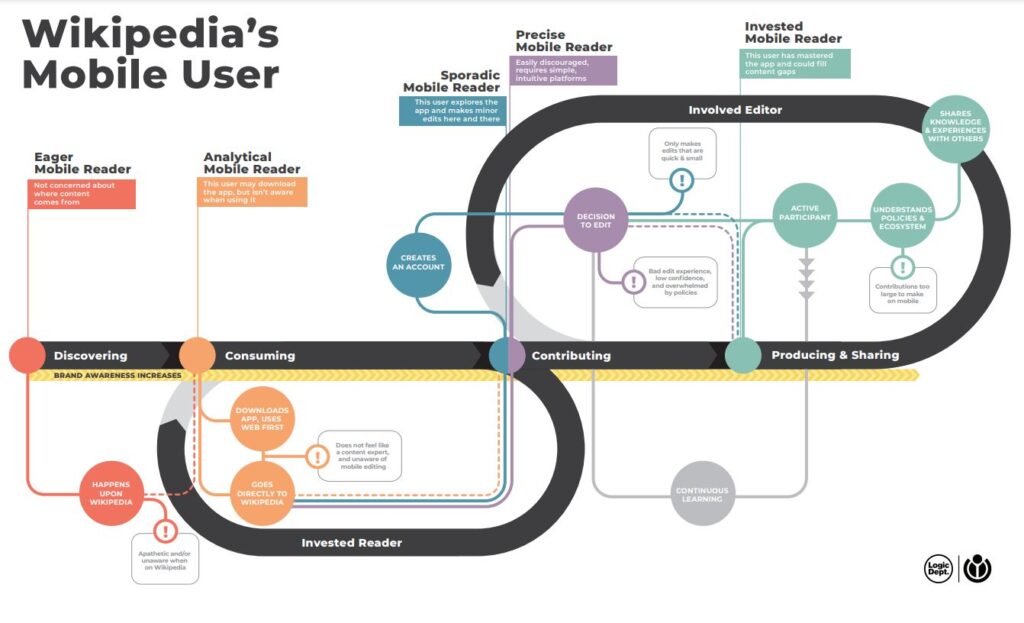
From a funnel perspective it starts with how people are reached on the broadest level digitally, then how are they identified and retargeted to some degree, then how are they exposed to product in a regular way and coming down to conversion, how successful the business at drawing people all the way down the funnel and converting leads into sales.
The simple reality is if digital can impact the bottom line in anyway, then there is going to be a lot of interest, but often digital is a necessary intangible.
3. Build bridges, look after your teams
Front end teams, integration teams, core system teams, architects, analytics teams, business process teams, strategy and innovation teams are often disparate.
Siloes in corporate often result in people trying to deliver value within their locus of control with the budgets they have.
Cross functional teams and projects are seen as nice to have’s but not ideal for reaching KPIs and securing budgets for the following financial year.
However, digital never works unless the tech stack is well architectured and well-built and teams need to be able to work together to do that. Furthermore, digital teams will invariably have difficult problems to solve and the teams need to know their strengths, understand their teammates and have high levels of positive motivation to solve problems and get the job done.
This means understanding what makes a high-performance team is critical and helping team members to look after their physical and mental wellbeing.
Here are some characteristics for high performance teams:
They have defined roles and responsibilities.
They know others strengths and weaknesses.
They trust and respect each other.
They know their work fits the mission.
4. Win the support of your executive
If the CEO and CFO don’t believe in the CDO and their vision, their chances of not being part of the statistic are minimal. And if they believe in the vision it has to be one the CDO can fulfil on, not one where the targets are not met because of circumstance or dependencies on other teams.
CDOs should never promise something they can’t deliver and need to work hard to get buy into what they are doing and why they are doing it. It’s a difficult road to walk but a necessary one for the sake of longevity and success.
5. Innovate
Innovation is a tough thing to get right within a corporate space. But when companies like General Electric reduced a projected decade long project down to several months and turned it into a multibillion-dollar revenue stream as described in the book, the Start Up Way by Eric Ries, then the case for innovation becomes clear.