Product Lifecycle

Building products or services requires a specific approach to achieve specific outcomes.
Firstly, assumptions need to be tested, and questions must be asked about whether the product or service truly solves a real-world problem.
The process of developing the product or service should then be rigorous and methodical.
Next, it’s essential to consider the environment — how to launch, market, and ensure the product’s success, especially when it faces competition in the market.
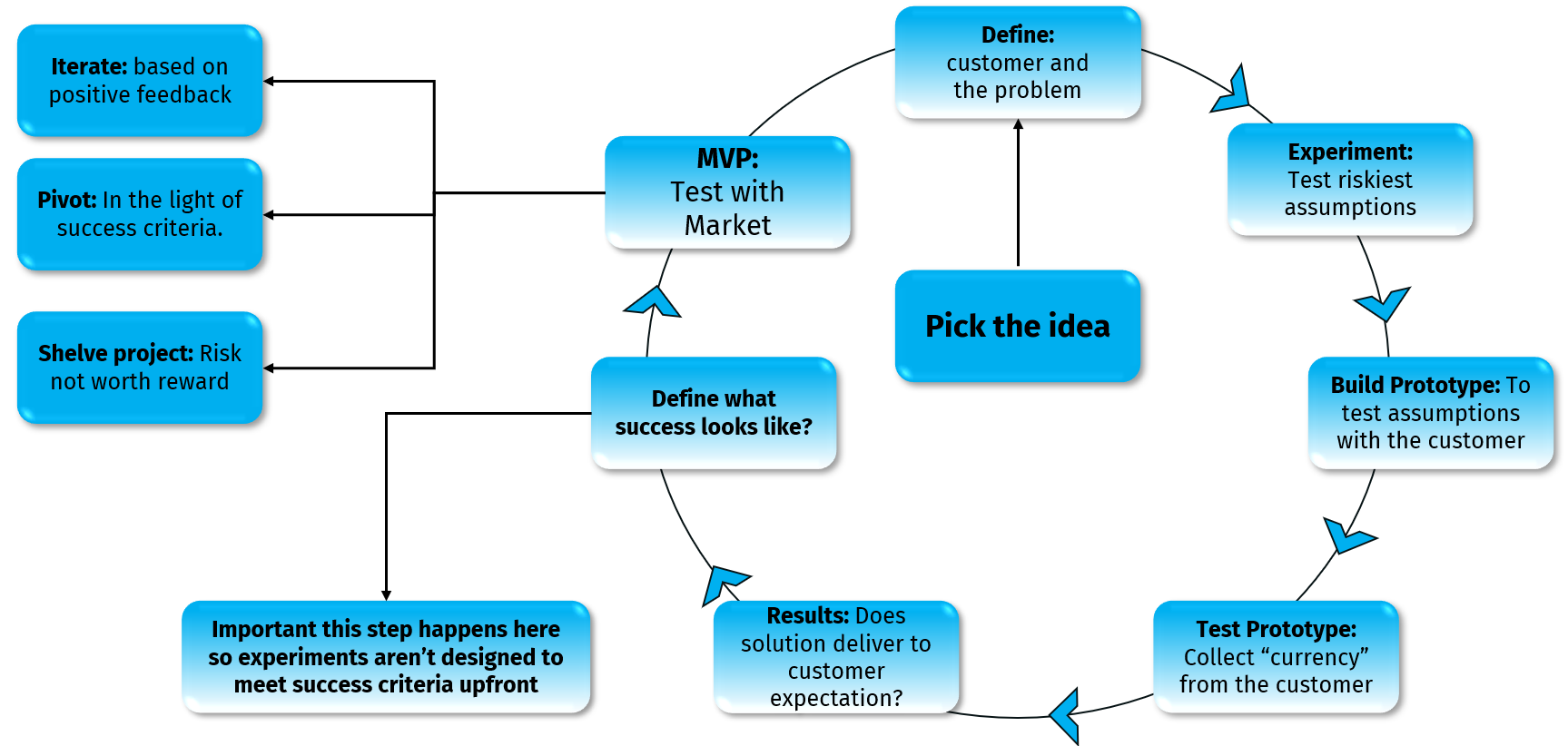
Invariably, it’s not the best product ideas that win, but those that make it through the process and gain a foothold in the market.
Building products and services in a start-up environment is often easier than within a corporate, as there are far fewer processes and structures in play.
Unlike start-ups, which typically consist of innovation teams, most larger businesses are dominated by delivery teams.
Here’s how they differ:
Corporates usually operate within strict annual and quarterly budgets, whereas innovation projects tend to be exploratory in nature and can take an undefined amount of time.
This creates challenges in managing the cost risks of research and development, and in weighing those costs against the potential rewards if a project succeeds.
Innovation accounting, therefore, is often more of an art than a science — a reality that tends to frustrate most CFOs.
Managing the innovation process in a larger organisation is, therefore, a complex exercise that demands dedicated focus and a healthy dose of realism about the culture and operating environment in which teams are trying to innovate.
At Th1nk, we examine every step of the product development process to make it both efficient and repeatable.