Deliver product with discipline and clarity.
Most products fail not because the idea was wrong, but because the team didn't know how to test assumptions, read signals, and make disciplined decisions about what to build next.
The four phases of product lifecycle
Every product moves through four phases. The teams that understand where they are, and what that phase demands, consistently outperform those who don't.
Discovery
Define the problem worth solving. Validate the market, understand the user, and test assumptions before committing to a build. Most teams skip this. Most products fail because of it.
Build
Ship the minimum version that tests your core hypothesis. Speed matters. Quality of learning matters more. Build to learn, not to launch.
Grow
Validate product-market fit and establish the operating model that lets the team scale delivery without losing quality or momentum.
Scale
Optimise what works, retire what doesn't, and build the systems that allow the product to grow without the team breaking under the weight.
The pillars of product.
There are three pillars on which you have to build products that enable you to create product-market fit and go to market:
One of the fundamentals to ask with product is: whose problem am I trying to solve? Am I solving a problem I invented, or am I solving a problem for the customer?
Secondly, do they really need it solved? For example, I may think that asparagus ice cream is a great idea for the customer, but practically perhaps there's a good reason why nobody sells asparagus ice cream. Inventing it doesn't mean it's going to sell.
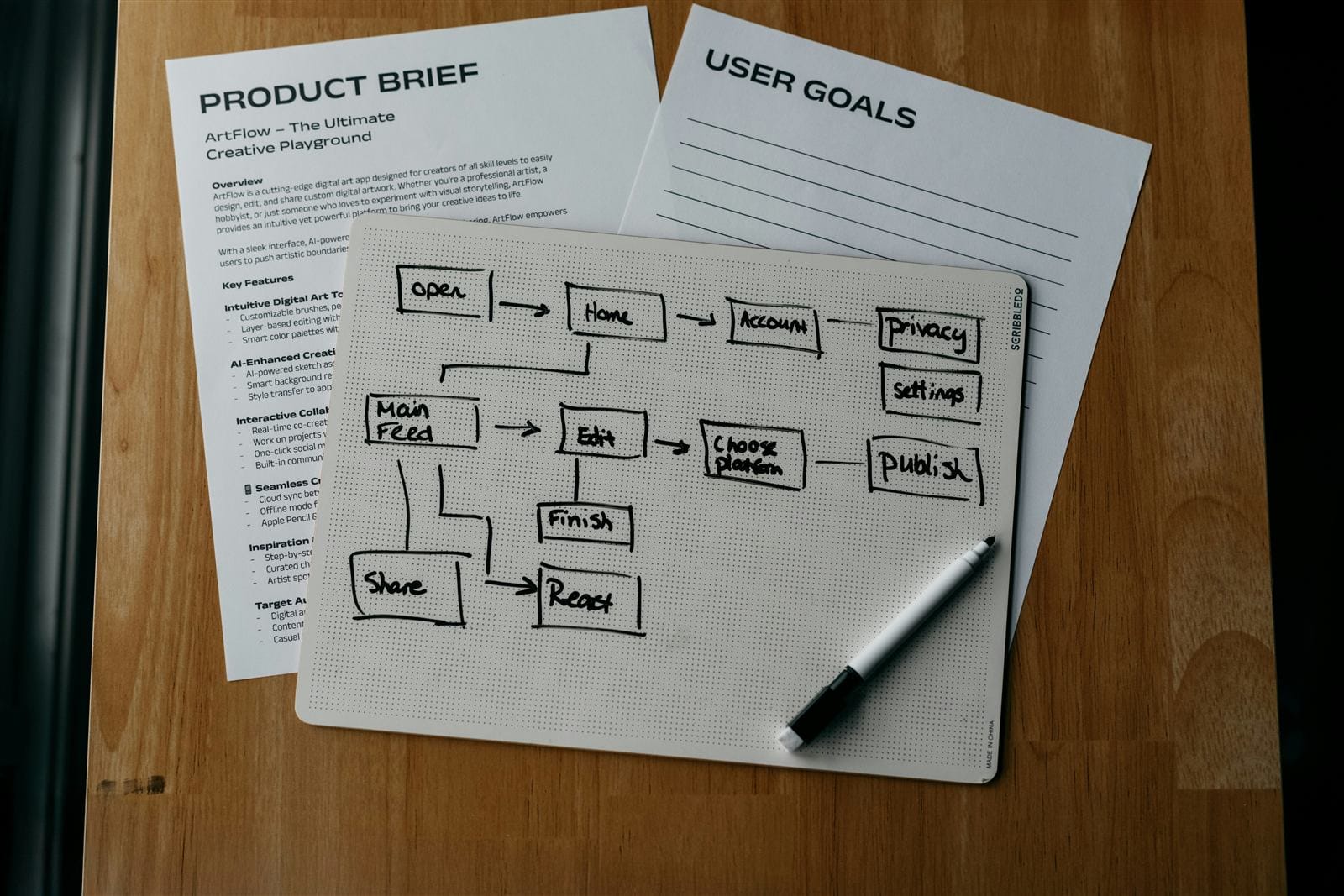
What good product delivery looks like
These are the disciplines that separate product teams who ship things people use from those who ship things that get shelved.
Product Market Fit
The moment when the product reliably solves a real problem for a defined set of users, and those users come back, tell others, and resist switching away. Everything before this is discovery.
Test Your Assumptions
Every product decision rests on assumptions. The job of a product team is to identify the riskiest ones and design the cheapest possible test to validate or invalidate them before committing to build.
Gear Your Team to Deliver
The right operating model for a discovery team looks nothing like the right model for a scaling team. Understanding which gear you're in, and configuring the team accordingly, is a core leadership skill.
The five areas of process
Product Lifecycle is one of five process areas. Jump straight to any of the others.

Team Formation
Performance starts as a structural issue. Team formation sets the ground rules up front, helping members understand where others come from and how they are wired, before the problems arise.

Team Cadence
Cadence is the antidote to failing willpower: not just a way of working but a rhythm of working. Built on the one-on-one and three honest questions, it grows into a consistent rhythm of delivery.

Innovation
Build the team that explores without breaking the team that delivers. Innovation fails when organisations ask delivery teams to also be innovation teams, when those two functions are fundamentally incompatible.

Digital Transformation
Where people, process and technology really come together, and the technology is usually the least important part. The hard part is implementation: changing how people work and carrying them with you until new ways of working stick.

All five areas of process
Back to the Process overview, with the five areas of work gearing and how it all comes together in a team.
Book a conversation
Start with a short call about how you build and ship. We will help you work out where to begin.