Personality
Personality has several dimensions worth understanding. We look at four lenses that shape how each person tends to show up.
Several dimensions, one person
Personality is not a single label. We find it more useful to read it across four lenses: your centre of intelligence (head, heart or gut), your core instincts, your stance, and how you handle difficulty. Each lens adds a little more to how a person is wired, and how they differ from the people around them.
Centres of Intelligence
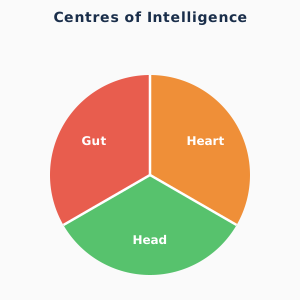
There are three centres of intelligence: the head, the heart and the gut. Most people are dominant in one, have a secondary competency in another, and repress the third.
Head people look at what is true, what could go wrong, and what makes rational, logical sense. Heart people look at how a message lands in the room, how it makes people feel, and what it means for them relationally. Gut people look at what needs to happen now and where the boundaries are, and instinctively want to create forward movement.
Instincts
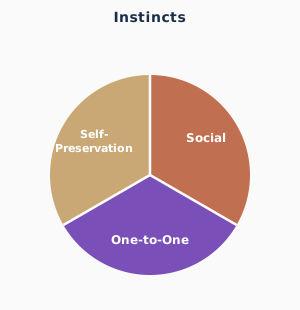
Our instincts are made up of social, one-to-one and self-preservation instincts. This is not to be confused with being extroverted or introverted. Extroversion and introversion are about energy: if people energise you, you are extroverted; if relating to people drains you, you are introverted. Instincts are about how we interact with people.
Social people look to the group for a sense of belonging and inclusion, want to contribute to the group, and are concerned with how the people around them are doing. One-to-one people scan for depth, chemistry and trust in a direct connection with another person. Self-preservation people are more concerned with their own resources, comfort and safety before they think about others.
Stances
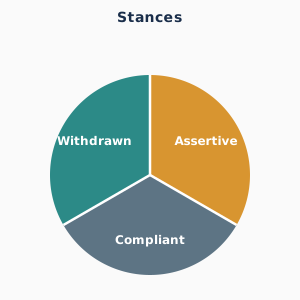
Stances define how people move through the world. Withdrawn people need space, time and privacy; they process their environment through the lens of the past before responding, so they are past-tense focused. Compliant people move towards others along the lines of duty and expectation and what is happening in the room right now; they are present-tense focused. Assertive people tend to be independent and push forward, challenging and moving against obstacles; they come with a future tense.
Handling Difficulty
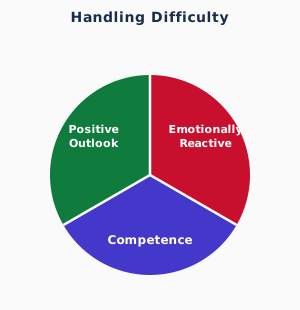
People handle difficulty through three lenses. The positive-outlook lens reframes difficulty, encourages those around them and looks for the upside, moving quickly towards hope. The competence lens stays in control and rational, managing difficulty by solving problems and staying capable. The emotionally reactive lens needs to find the truth and its impact on others, and to name what happened before moving on.
The five lenses on how we are wired
Personality is one of five lenses. Jump straight to any of the others.

Origin
Where we come from shapes how we communicate, what we value and how we read a situation. Culture is built deliberately, then reinforced.

Work Gearing
The skills you use to operate in an organisation, and why they are not the same as your personality. It centres on the work you love.

Leadership Style
Leadership style read against the phase an organisation is in, and the real skill of knowing when to step forward and when to step back.

How We Show Up Emotionally
There are 87 human emotions, yet most people can name only three. We explore four ways people tend to show up.

All five lenses
Back to the People overview, with the five lenses and how it all comes together in a team.
Book a conversation
Start with a short call about your people and your teams. We will help you work out where to begin.